How AI Is Changing Sleep Health in 2026
Sleep is no longer treated as "just rest." In 2026, sleep is recognised as a core pillar of health, productivity, mental well-being, and long-term performance. At the centre of this shift is artificial intelligence (AI).
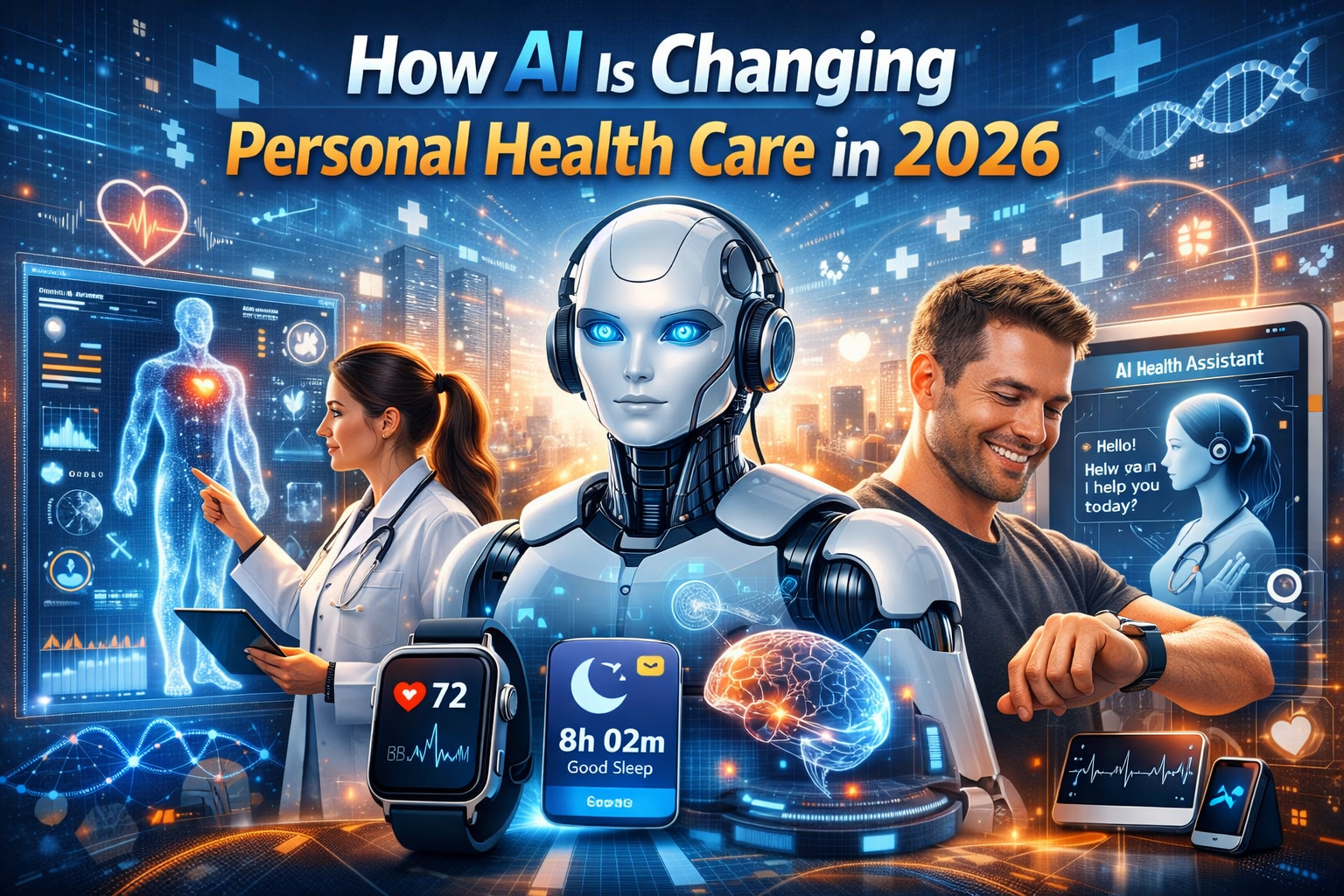
AI is transforming how we understand sleep, how we track it, and how we improve it. What used to be generic advice like "sleep 8 hours" has evolved into highly personalised, data-driven sleep health strategies tailored to individual bodies, lifestyles, and environments.
This article explores how AI is changing sleep health in 2026, why this trend is accelerating, and what it means for people who want better sleep — not just more sleep.
Why Sleep Health Is a Major Focus in 2026
Over the past decade, sleep problems have increased worldwide. Modern lifestyles bring:
- High screen exposure and blue light disruption
- Irregular work schedules and shift work
- Chronic stress and anxiety
- Reduced physical activity and recovery time
- Increased mental health challenges
People are no longer satisfied with basic sleep tracking. They want answers, patterns, and solutions. That's where AI comes in.
What Makes AI Different From Traditional Sleep Tracking?
Before AI, sleep tracking relied on static rules — time asleep, time awake, basic sleep stages, and fixed thresholds. These systems treated all users the same.
AI changes this completely. AI-powered sleep systems use machine learning, pattern recognition, behavioural modelling, and large datasets. This allows AI to answer deeper questions such as:
- Why did your sleep quality drop last night?
- How does your stress level affect REM sleep?
- What bedtime routine works best for you?
- How does your bedroom environment impact your recovery?
AI moves sleep health from measurement to understanding.
AI and Wearable Sleep Technology in 2026
Wearable devices are one of the biggest drivers of AI-powered sleep health. Modern smart sleep wearables now track:
- Heart rate variability (HRV)
- Breathing patterns and respiratory rate
- Body temperature changes throughout the night
- Movement and micro-awakenings
- Sleep stage transitions
How AI improves wearables
AI analyses this data over weeks and months, identifying individual sleep signatures. Instead of comparing you to population averages, AI compares you to yourself. Benefits include:
- More accurate sleep stage detection
- Detection of subtle sleep disruptions that basic trackers miss
- Personalised sleep scores that reflect your individual baseline
- Actionable insights instead of raw numbers
In 2026, wearable sleep trackers are no longer passive devices — they are sleep coaches powered by AI, offering intelligent analysis and adaptive recommendations that evolve with your changing needs.
Personalised Sleep Recommendations — The Biggest Breakthrough
One of the most important ways AI is changing sleep health is personalisation. Traditional sleep advice often fails because it is too general. AI recognises that sleep is deeply individual.
AI-driven personalisation includes:
- Ideal bedtime windows based on your circadian rhythm and chronotype
- Personalised wind-down routines that match your stress patterns
- Optimal wake-up timing aligned with your sleep cycles
- Recovery-based sleep duration recommendations after exercise or illness
- Lifestyle adjustments tailored to your specific habits and schedule
Example: two people may sleep 7 hours, but AI can determine that Person A is fully recovered while Person B needs 8.5 hours due to stress or physical activity. This shift from generic sleep advice to personal sleep intelligence is a defining trend of 2026.
AI and Sleep Environment Optimisation
Sleep health is not just about the body — it's also about the environment. AI is now used to optimise bedroom temperature, lighting conditions, noise levels, and air quality.
Smart sleep environments in 2026
AI-enabled systems can dim lights gradually before bedtime, adjust temperature during deep sleep, reduce noise disruptions, and sync smart alarms with your sleep cycle stage. Rather than forcing the body to adapt to the environment, the environment adapts to the body.
AI and Sleep Disorder Detection
Another powerful use of AI in sleep health is early detection. AI can identify irregular patterns that may signal:
- Chronic insomnia
- Sleep apnea risk
- Circadian rhythm disorders
- Stress-related sleep disruption
While AI does not replace medical diagnosis, it helps users recognise potential problems early, understand long-term sleep trends, and seek professional help sooner. According to the Sleep Foundation, early detection of sleep issues can significantly improve treatment outcomes.
AI, Mental Health, and Sleep Anxiety
Mental health and sleep are deeply connected. Many people have developed sleep anxiety — worrying about sleep itself, which ironically worsens it. Research from the National Institutes of Health shows that anxiety-related sleep problems affect millions worldwide.
AI helps reduce this by replacing guesswork with clarity, showing long-term trends instead of nightly fluctuations, and framing sleep as progress rather than perfection. This mental reframing is an underrated but powerful benefit of AI-driven sleep tools.
Sleep as a Performance Metric in 2026
Sleep is no longer viewed as passive rest — it is now seen as active recovery. AI helps quantify sleep's impact on focus and productivity, emotional regulation, physical recovery, and cognitive performance. By connecting sleep data with daily performance metrics, AI shows users how sleep directly affects their lives.
AI and Long-Term Sleep Health Trends
AI's biggest strength is long-term learning. Over time, it analyses seasonal changes, lifestyle shifts, stress cycles, and ageing-related sleep changes. This allows for more accurate predictions, smarter recommendations, and better alignment with real life. Sleep health becomes a continuous journey, not a short-term fix.
Ethical and Privacy Considerations
As AI becomes more integrated into sleep health, data privacy matters. Users should consider how sleep data is stored, who can access it, and whether platforms use data responsibly. There is also the risk of orthosomnia — excessive focus on sleep data creating anxiety about imperfect metrics. Platforms prioritising transparency, security, and user control will lead the future of AI-powered sleep health.
Final Thoughts — Smarter Sleep for a Healthier Life
AI is redefining what it means to sleep well. Instead of chasing perfect sleep, people are learning to understand their bodies, optimise their routines, create supportive environments, and build sustainable sleep habits.
The future of sleep health is not about technology replacing human intuition — it's about technology enhancing awareness. In 2026, that transformation is just getting started.
If your immediate goal is better sleep onset, read our how to fall asleep fast guide for practical techniques you can apply tonight. Or use our sleep cycle calculator to find the perfect bedtime based on your wake-up time.
Frequently Asked Questions
About the Author
Somnath Bhattarai is the founder of REMNIX, a sleep-focused platform dedicated to improving sleep quality using science-backed methods. His work focuses on circadian rhythm, sleep cycles, and practical sleep improvement strategies.